
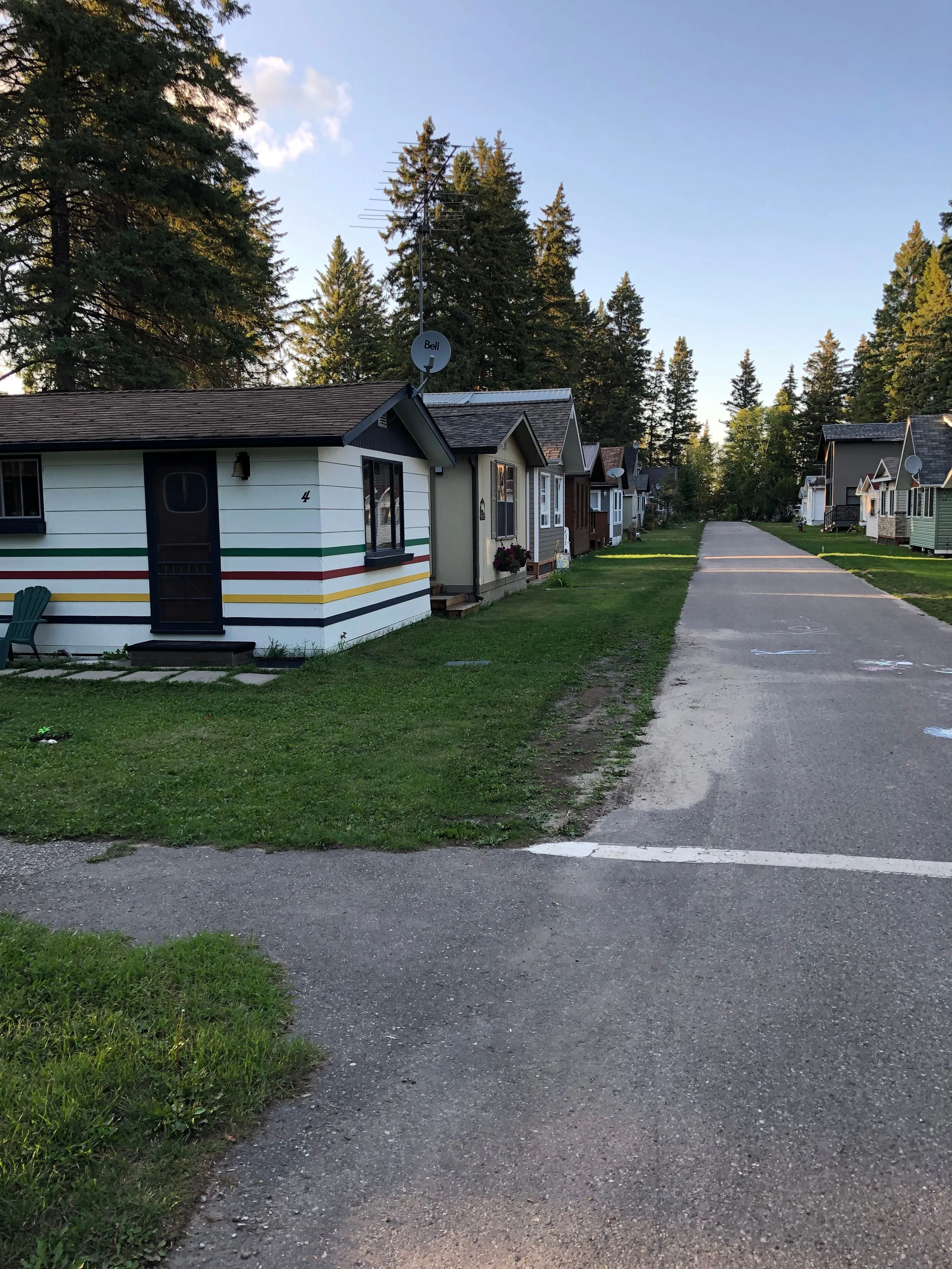
Welcome to the Old Campground
The OCCA represents it’s members in the Old Campground cabin area.
The Association was formed in 1974 to give the cabin owners a collective voice within the Wasagaming community of Riding Mountain National Park. In addition to working with Parks Canada to improve conditions in the cabin area, the Association also participates in other community forums along with other organizations, such as the Chamber of Commerce and the Clear Lake Cottage Owners Association, to improve conditions within and protect the uniqueness of Wasagaming and RMNP.
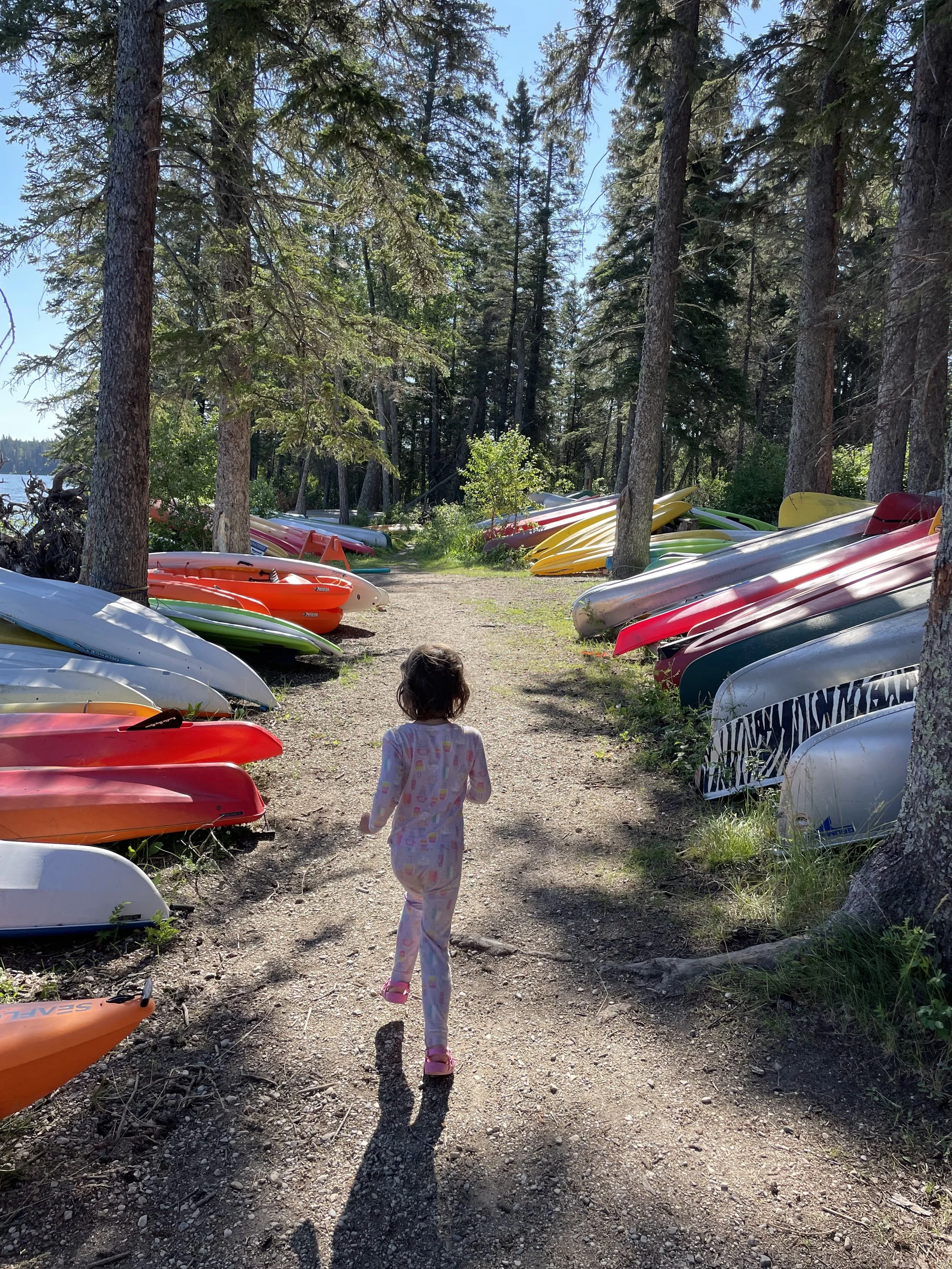
Who We Are
-
The Old Campground Cabin Association (OCCA) exists to represent and advocate for the collective interests of all cabin leaseholders in the historic Clear Lake Cabin Area. We work independently and alongside partner organizations to provide informed input to Parks Canada, ensuring decisions reflect the needs and vision of our community. Through communication, collaboration, and community engagement, we strive to enhance the knowledge, safety, and enjoyment of all members.
-
Executive:
Christian Robin – Past President
Terry Botterill – President
Rick Grimshaw – Vice President
Dan Leitch – Treasurer
Colin Gilmore – Secretary
Directors at Large:
Carl Adam
Kyle Bazylo
Kyla Cottom
John George
Michael Hance
Jill Lee
Gale Simpson
Andrew Urbanowicz
-
Love to plan? There are other ways to get involved with our wonderful lake community.
Finance & Operations - Chair: Dan Leitch, Treasurer
Policy & Governance - Chair: Rick Grimshaw, Vice President
Communications & Outreach - Chair: Kyla Cottom
Grounds & Property Development - Chair: John George
Established Sub-Committees:
Membership Sub-Committee - Chair: Michael Hance
Nominating Sub-Committee - Chair: President and Vice President
Social Sub-Committee - Chair: Chris Robin
-
UPDATED VERSION COMING SOON!
This document lays out how the Old Campground Cabin Association (OCCA) works and what it stands for. It explains the Association’s purpose (to advocate for cabin leaseholders in the Cabin Area), how membership works, how the Board and committees are structured, and how decisions get made at meetings.It also includes a series of Bylaws and position statements on key issues like Cook Shacks, firewood, public washrooms, the Shower Building, reforestation, dock areas, rentals, Jamboree Hall, and leaseholder compliance—essentially, OCCA’s “official stance” on how the Cabin Area is managed and protected.
Members should read this Constitution because it tells you:
What your membership gives you (voting rights, how to get involved, how to serve on the Board or committees).
Who represents you and how decisions about the Cabin Area are made and communicated with Parks Canada.
Where OCCA stands on important community issues that affect your day-to-day use and long-term enjoyment of the Cabin Area.
In short, it’s the roadmap for how your Association operates and advocates on your behalf. Reading it helps you understand your rights, responsibilities, and how to have a voice in shaping the future of the Cabin Area.
A Living Piece of Park History
The Story of the Old Campground at Clear Lake.
On the west side of Wasagaming, beside the quiet curve of the boat cove, sits one of Riding Mountain National Park’s cherished communities: the Clear Lake Cabin Area. Today, 525 cabins line the winding roads of this five-acre neighbourhood, but its roots stretch all the way back to the very beginning of the Park.
-
When Riding Mountain National Park laid out its original development plan in 1931, a five-acre parcel just outside the Clear Lake townsite was surveyed for a new campground. It was thoughtfully designed:
10 blocks of 24–32 lots each
16 kitchen shelters
4 washrooms
Two rare log refrigerator buildings where campers stored perishable food
And a striking rustic community hall—Jamboree Hall—built in 1933 as the social heart of the campground.
The campground grew quickly during the Depression, doubling in size to 565 lots as workers and their families sought long-term seasonal stays. Work crews living in the Park often reunited with their families here for the summer. One of the most well-known was the Creed family. Vic Creed, who supervised the construction of the Clear Lake Golf Course and became its first greenskeeper, lived in the campground seasonally for many years with his wife Ann and their son Lloyd.
-
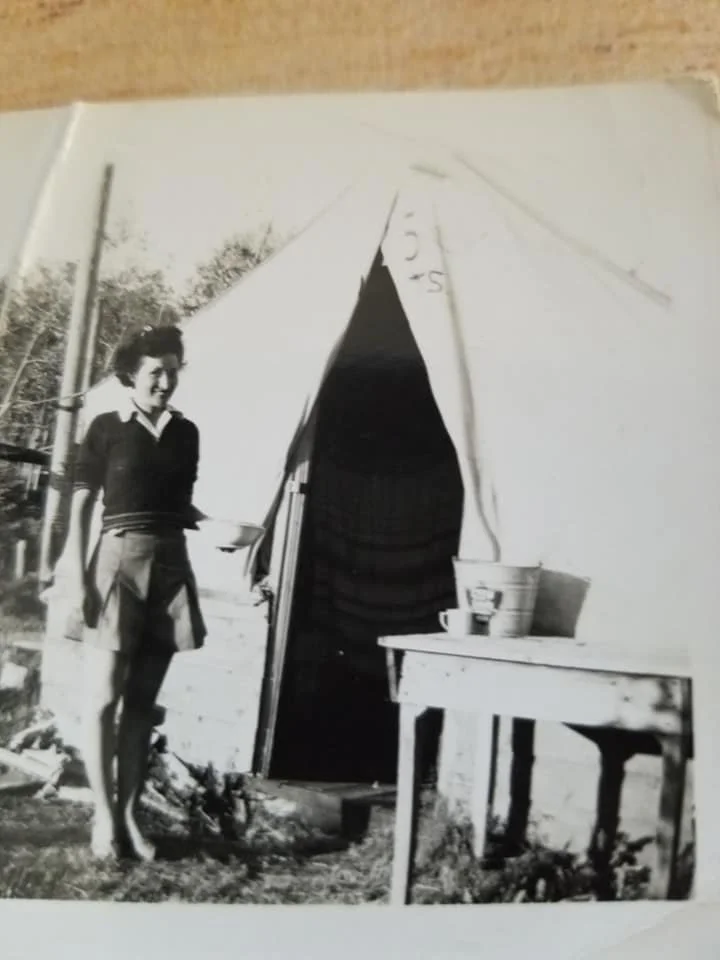
Before cabins, the preferred accommodation was the wall tent, a canvas tent with a gabled roof that often gained wooden floors and partial walls, making them look surprisingly cabin-like.
Communal life flourished. Kitchen shelters—beautiful 1930s structures made from peeled log posts and open gable roofs—served as the evening gathering places for extended families and clusters of neighbours. Water was pumped from wells, wood stoves warmed the shelters, and the campground’s grid of paths and facilities formed the same layout you can still walk today.
By the 1950s, wood cabins began to appear, many small plywood-backed structures built with 2×2 framing. Families like the Carters and Mintys hauled them in and out every season, storing them through the winter. Cabin life had arrived, just not yet permanently.
-
In 1960, a new Wasagaming Campground opened, and the original campground transitioned into the seasonal campground.
As stays grew more permanent, Parks Canada added new kitchen shelters and continued maintaining the communal structures. Electricity was brought to certain trailer lots, but the layout of the original 1930s campground remained intact, a layout still recognizable today.
-
Everything changed in 1978, when Parks Canada allowed permit holders to leave their camping units on their lots year-round. No more hauling buildings in and out and storing them off site for the winter.
And with that, the modern Clear Lake Cabin Area, now known as The Old Campground, was officially born.
The old tents and trailers soon vanished. Cabins grew larger, sturdier, and equipped with more comforts. Building regulations emerged to guide this rapid growth, first limiting cabins to 24' x 16', a size that conveniently aligned with garage packages sold at hardware stores. Many families built their summer home for around $5,000!
Over time, the regulations evolved to the familiar 16' × 32' design with a sleeping loft, creating the look of the OC today.
-
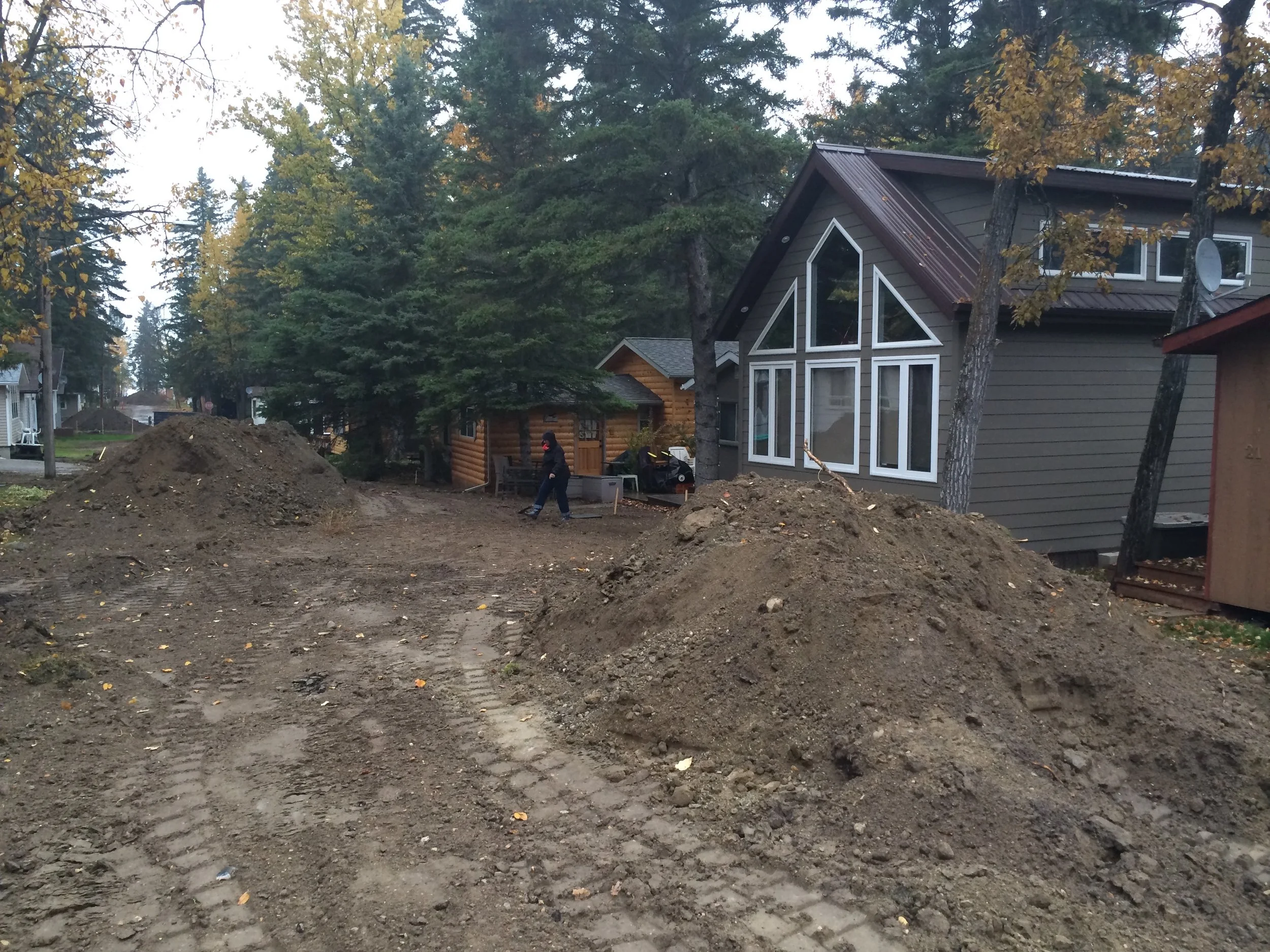
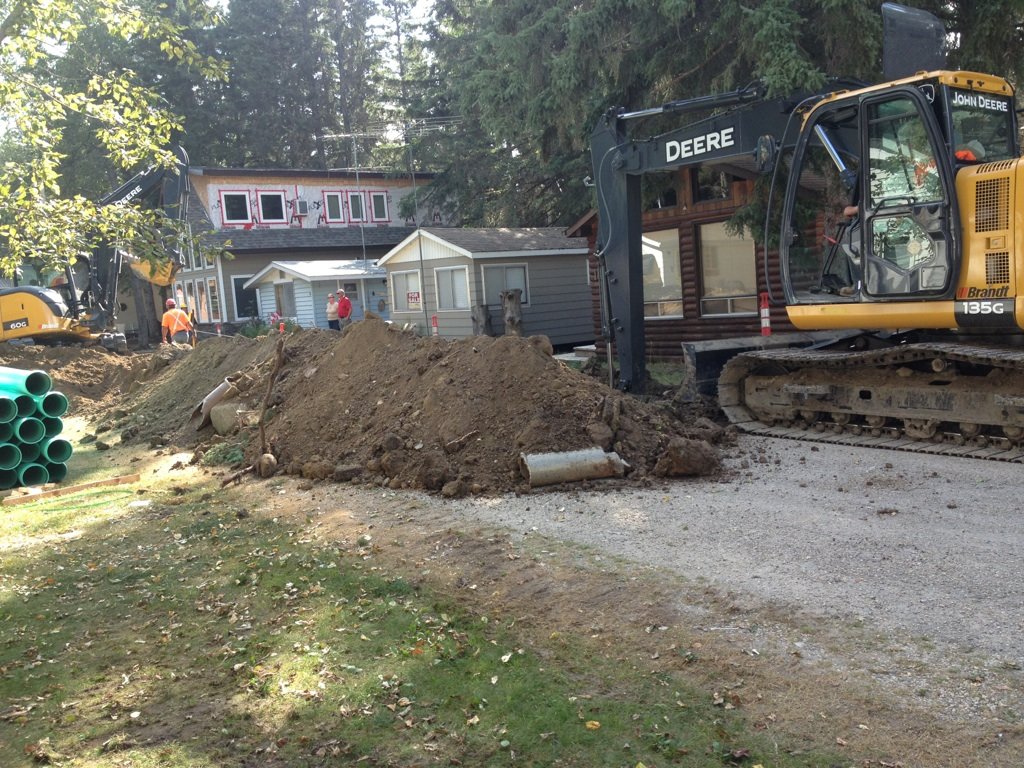
The most transformative update to the Cabin Area in recent history arrived in 2013, when water and sewer services were installed granting access to each cabin. For a community built on generations of rustic living, this shift was monumental.
With this change, everyday tasks became easier::
Cabins could add indoor washrooms and showers, eliminating nightly walks to the communal buildings.
Kitchens could have running water, meaning no more heating pots on the stove or hauling dishpans to the slop sinks.
Families could enjoy longer stays with the convenience of fully functional seasonal homes.
As cabins adapted to these new services, building regulations continued to evolve. The allowable footprint and standards now support modern layouts that fit growing families, making it easier for children, grandchildren, and extended relatives to return each year for summer holidays and weekend escapes.
Despite these updates, the Cabin Area’s character remains deeply rooted in its past. It’s still a place where neighbours gather at the cook shacks, kids race between cabin rows, and generations return to the same beloved lots that have anchored family memories for decades.
-
Despite the evolution from tents to wired cabins, the spirit of the old campground remains woven into daily life:
Jamboree Hall still stands at the head of the area, just as it did in 1933, serving as a heritage gathering place.
Kitchen shelters- some from the 1930s, some added later, continue to serve as social hubs.
The two historic ice houses still exist, one now a storage building and the other converted into a kitchen shelter.
The campground’s 1930s layout, pathways, and communal traditions live on, making the Cabin Area one of the most historically intact camping landscapes in Canada’s national parks.
Historical information has been abstracted from: RIDING MOUNTAIN NATIONAL PARK OF CANADA – BUILT HERITAGE RESOURCE DESCRIPTION AND ANALYSIS – Taylor, Edward Mills and Pat Buchik with the assistance of Katharine Kinnear Parks Canada Western Canada Service Centre, Calgary April 2001.
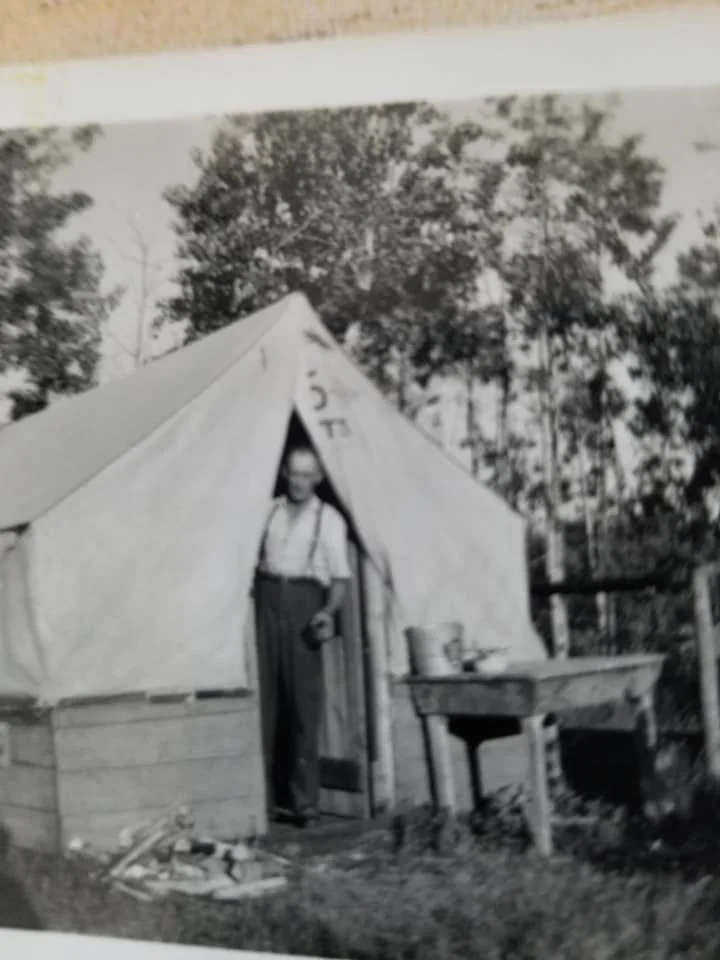
Original canvas tents for summer residence.
Original canvas tents for summer residence.
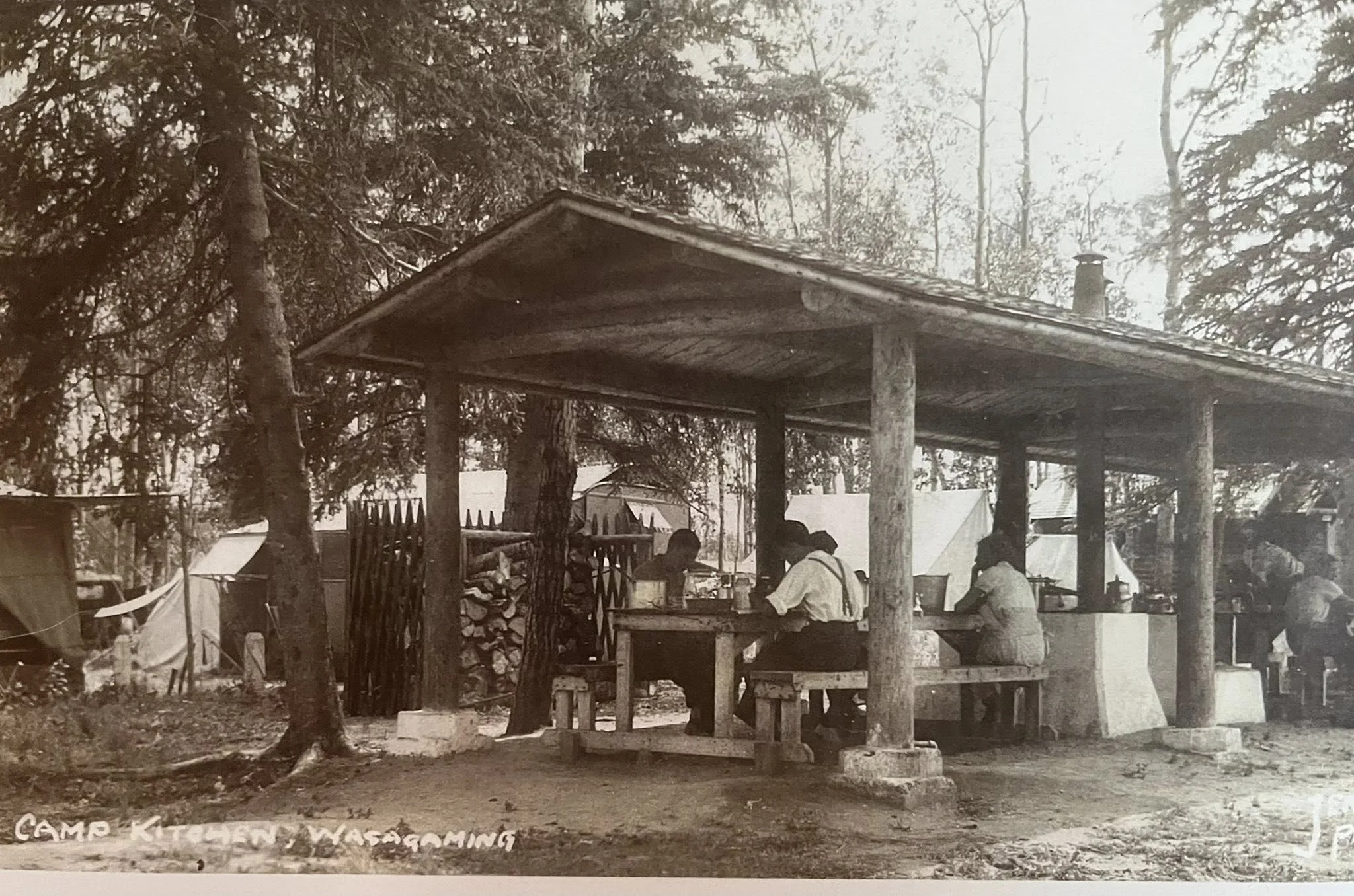
Camp kitchen.
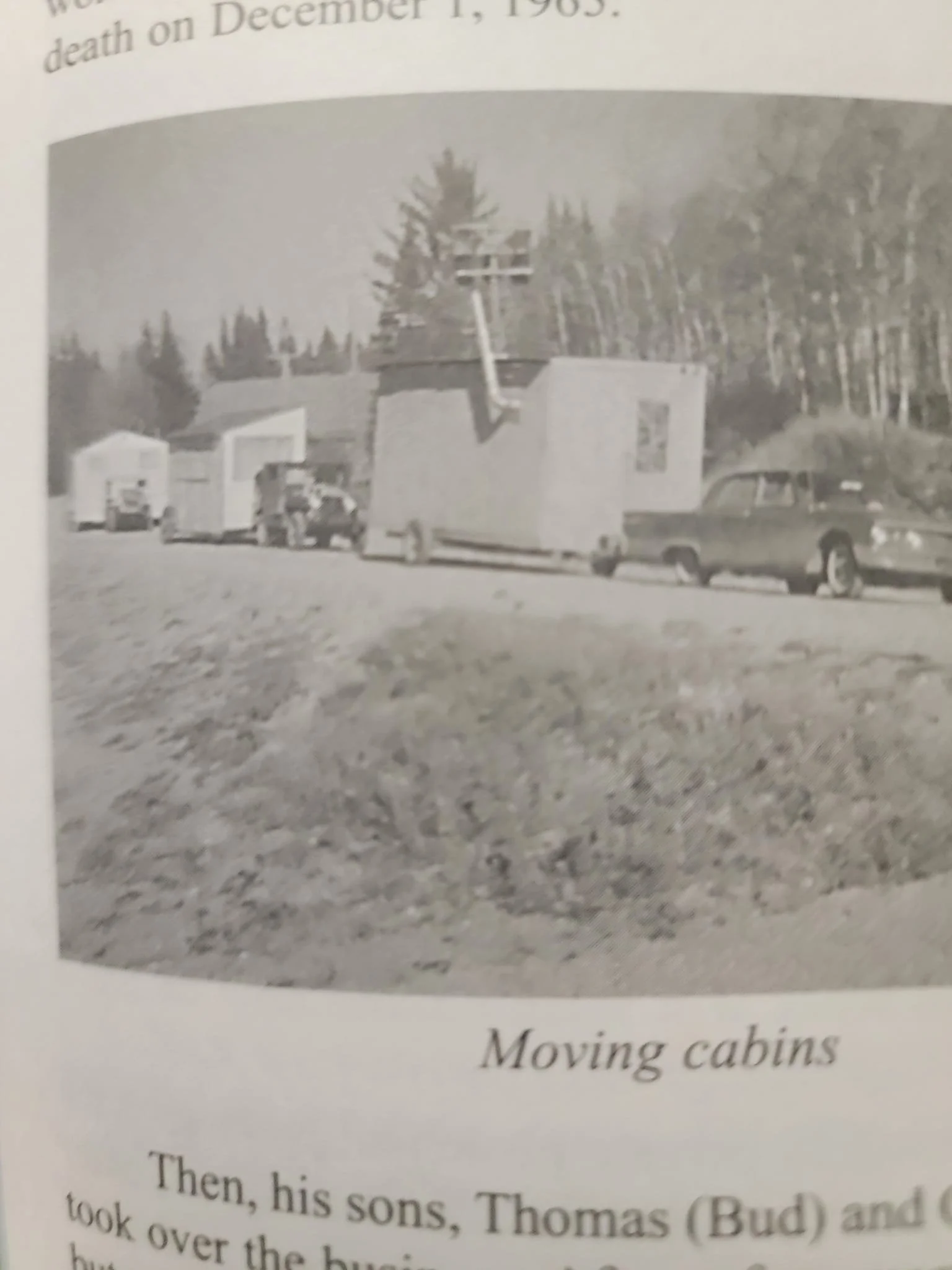
Cabins being moved in and out of the OC.
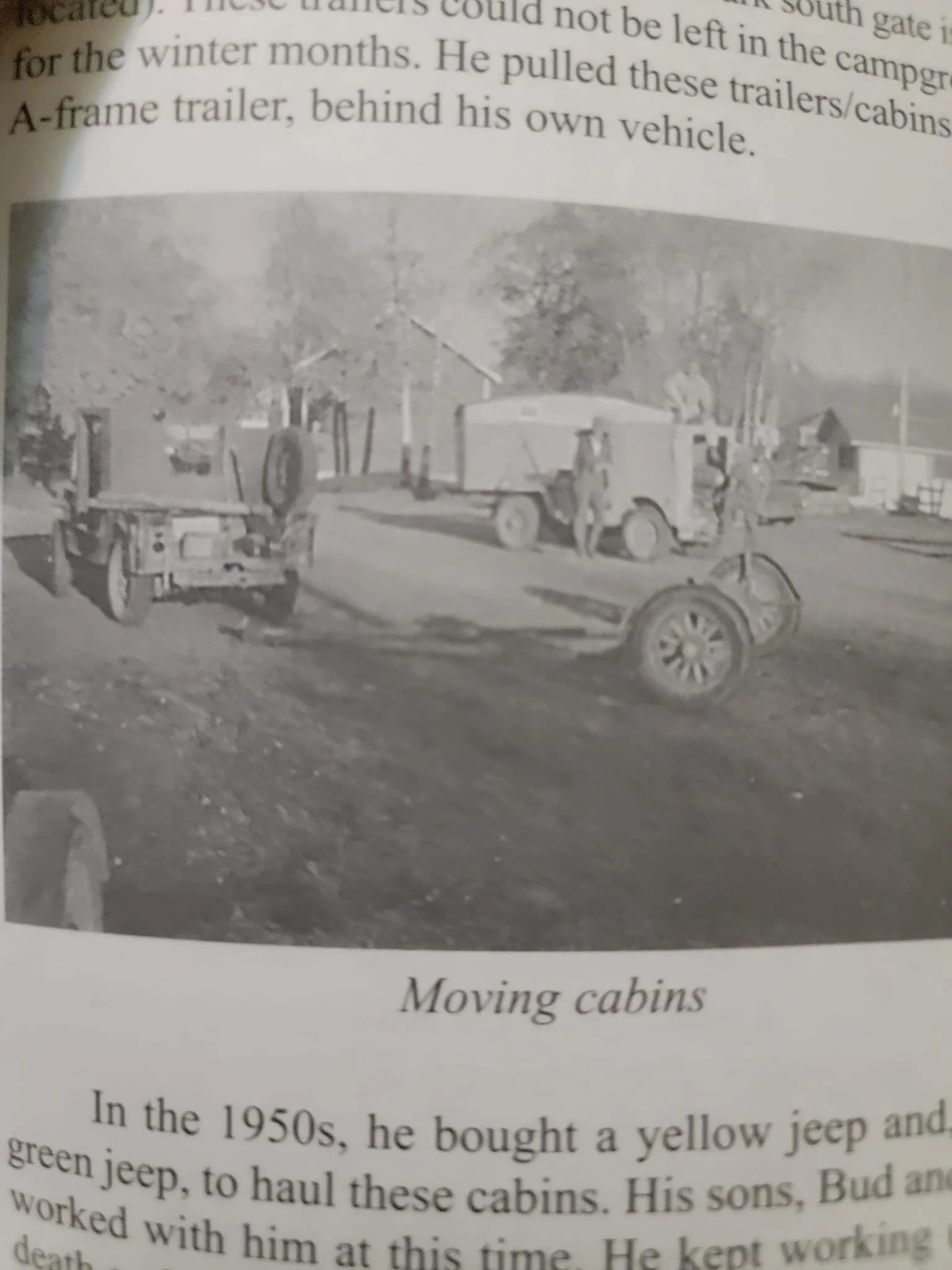
Cabins being moved in and out of the OC.
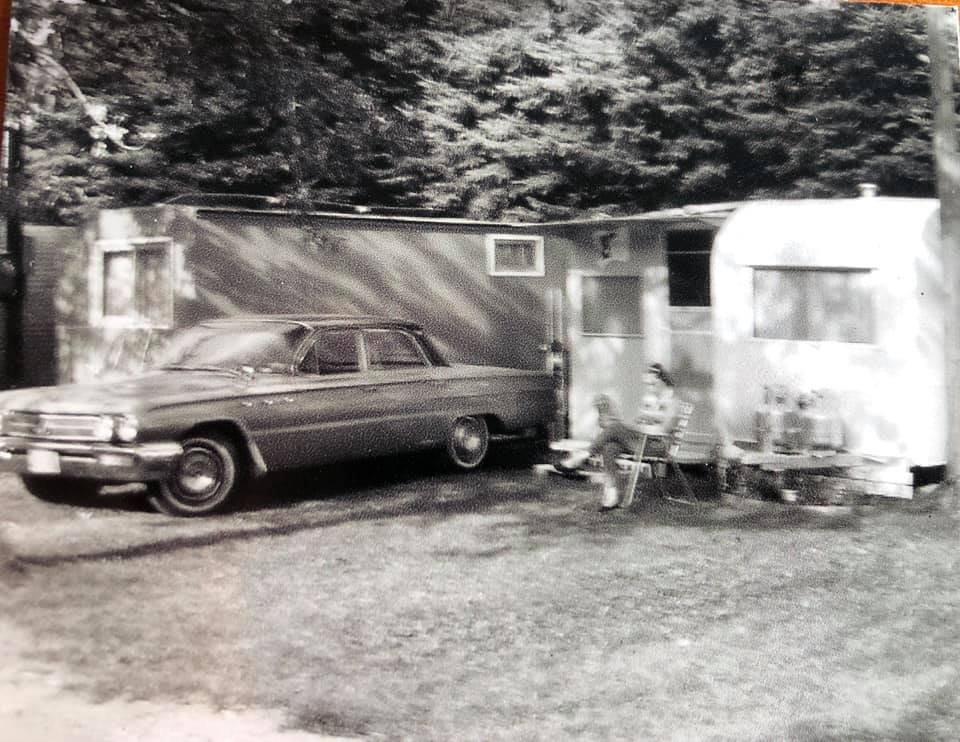
A trailer with annex in the Old Campground around 1969.
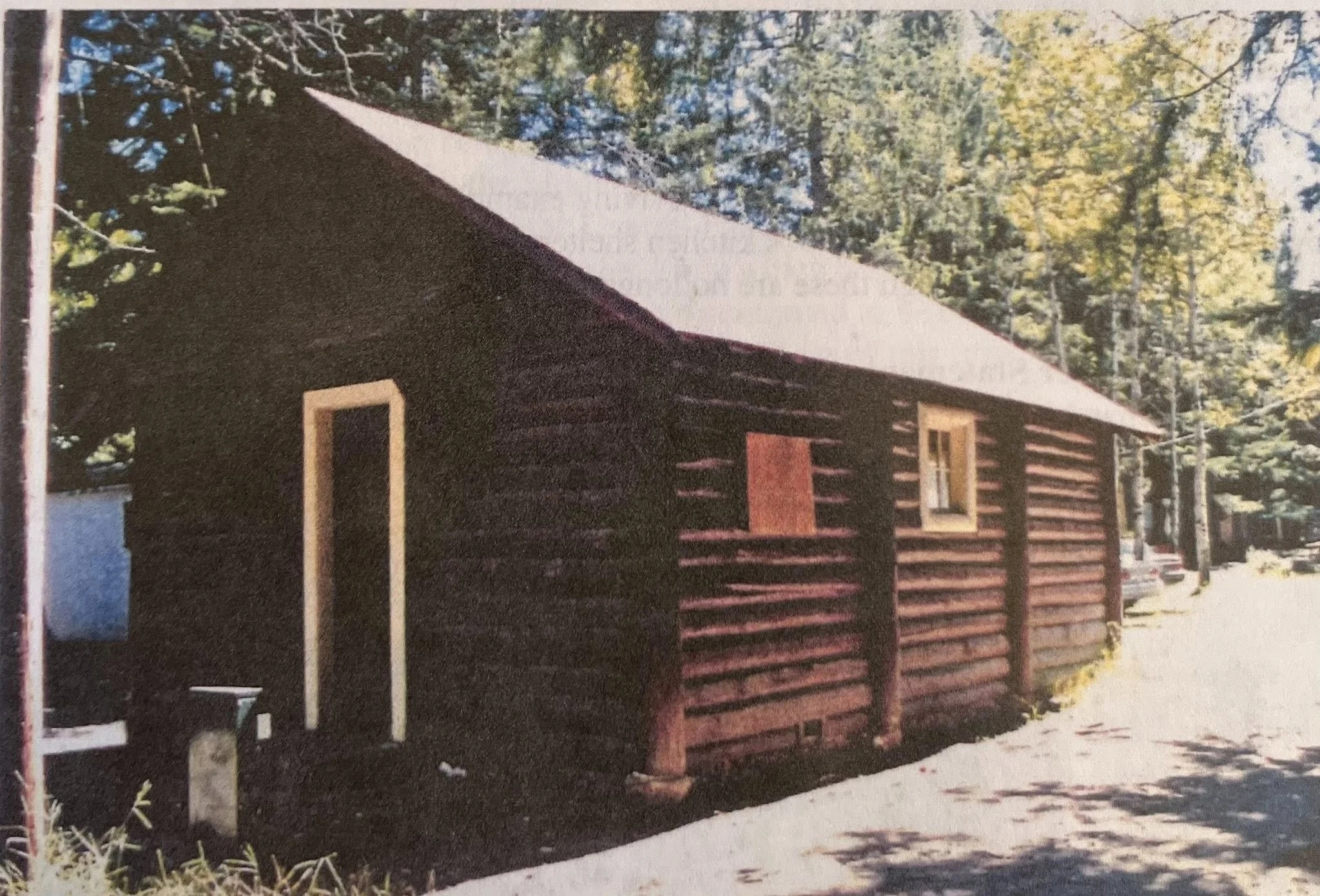
Communal fridge, or ice shack.
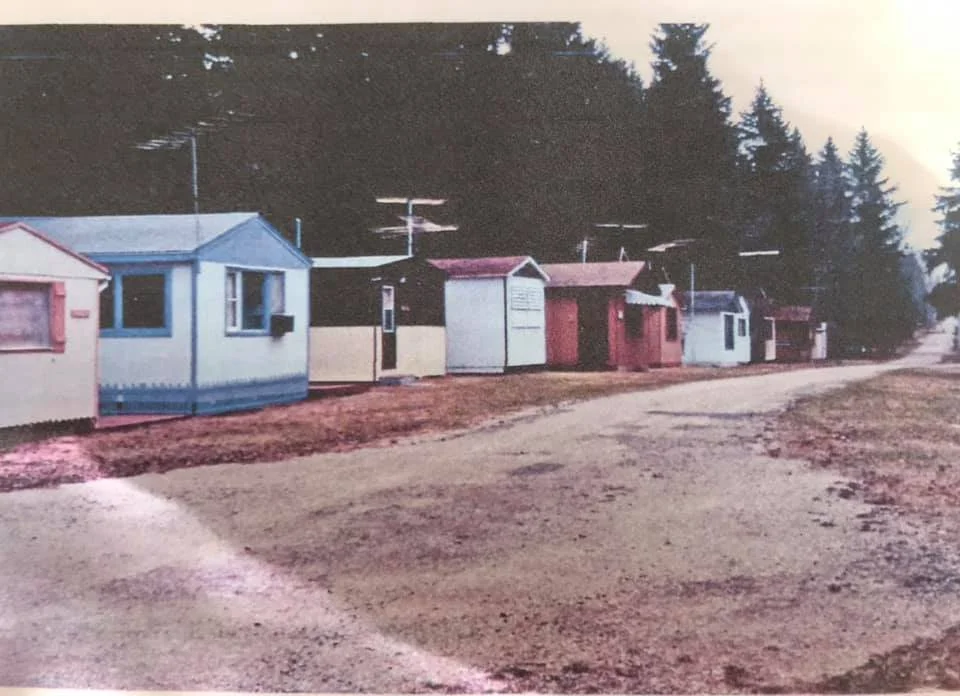
Evolution of cabins in the Old Campground.
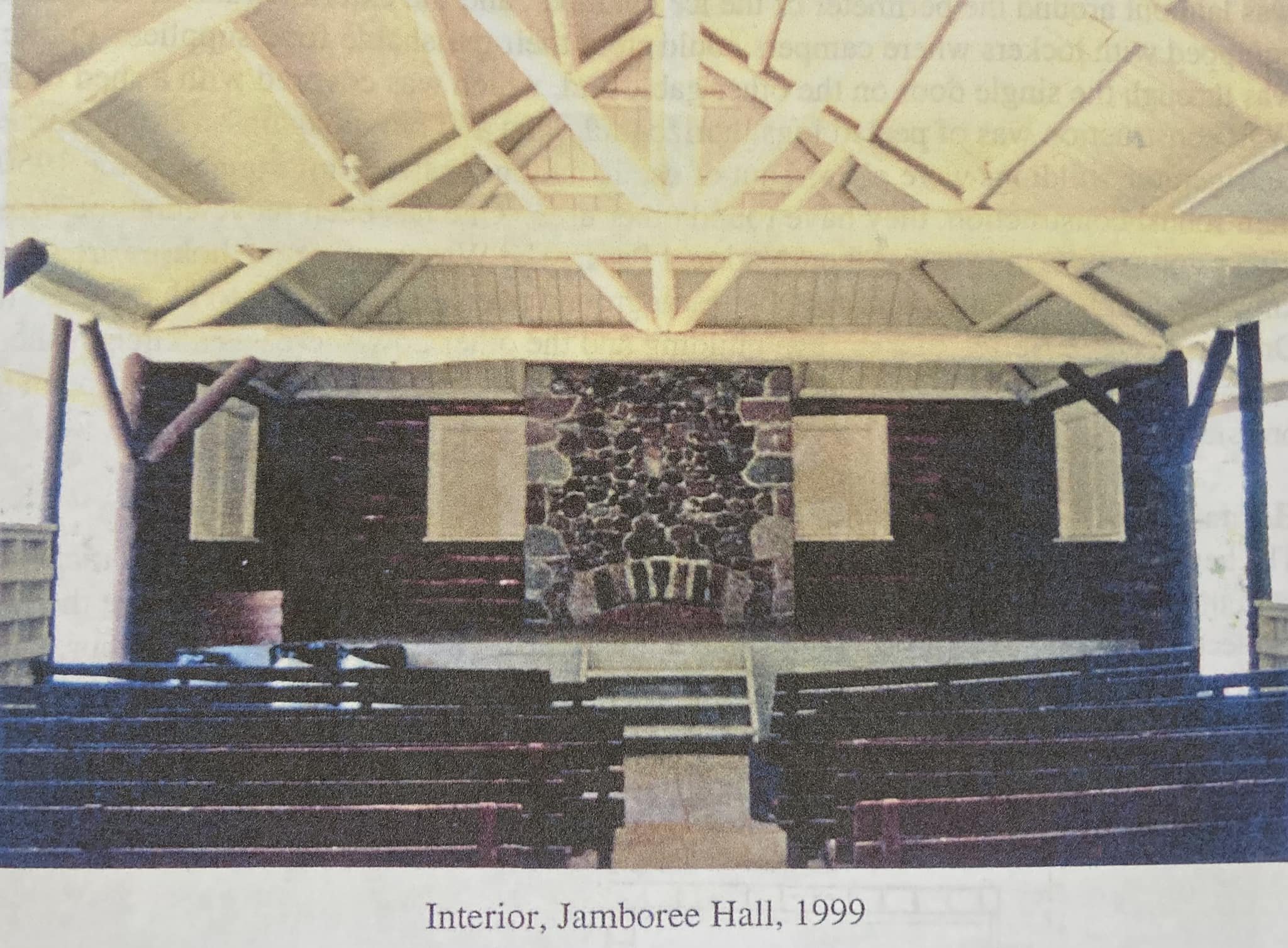
Jamboree Hall, a community gathering place and outdoor theatre.
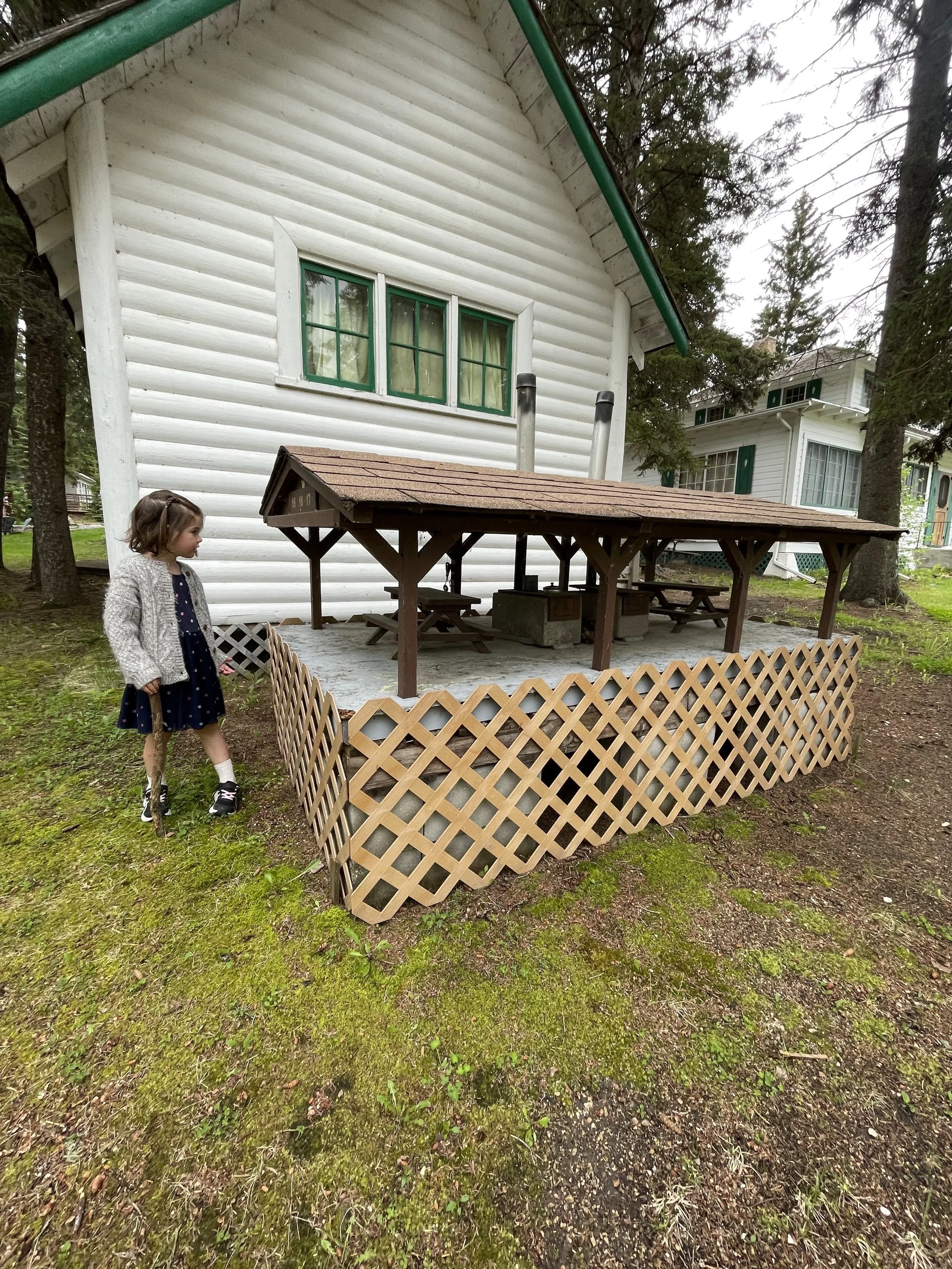
Model of a cook shack at the Pinewood Museum.
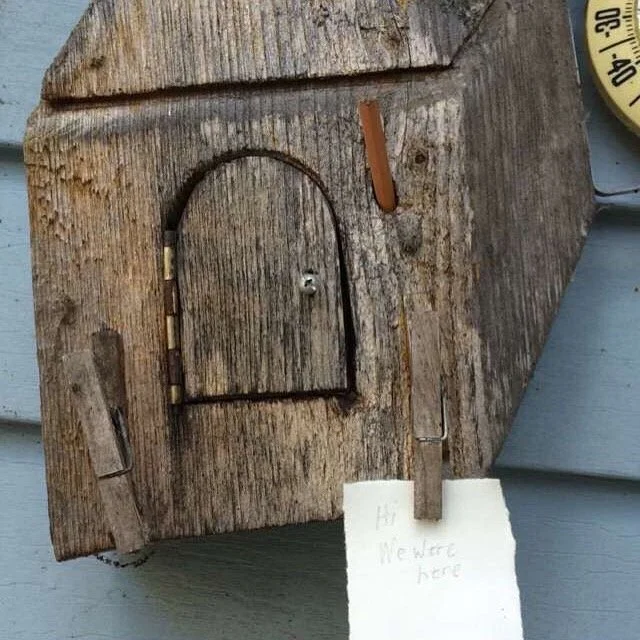
Before phone lines, neighbours left notes at cabins to connect.
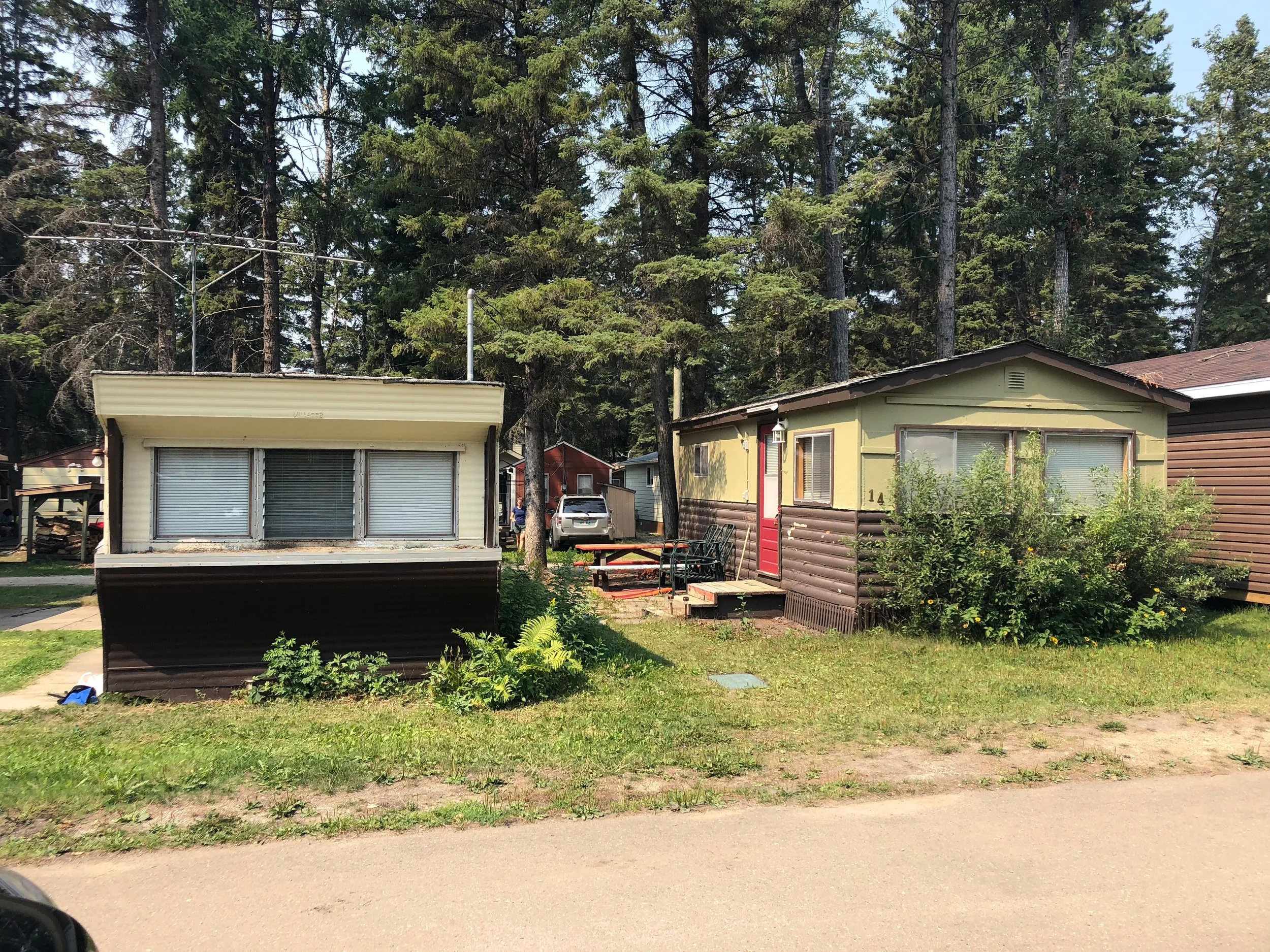
Original trailer from the 70's that was moved in and out from storage at Minty's beside a newer, more permanent cabin from the 70's.
The installation of water lines for running water to the cabins, around 2010.
Streets being dug up for the installation of water lines for running water to the cabins, around 2010.
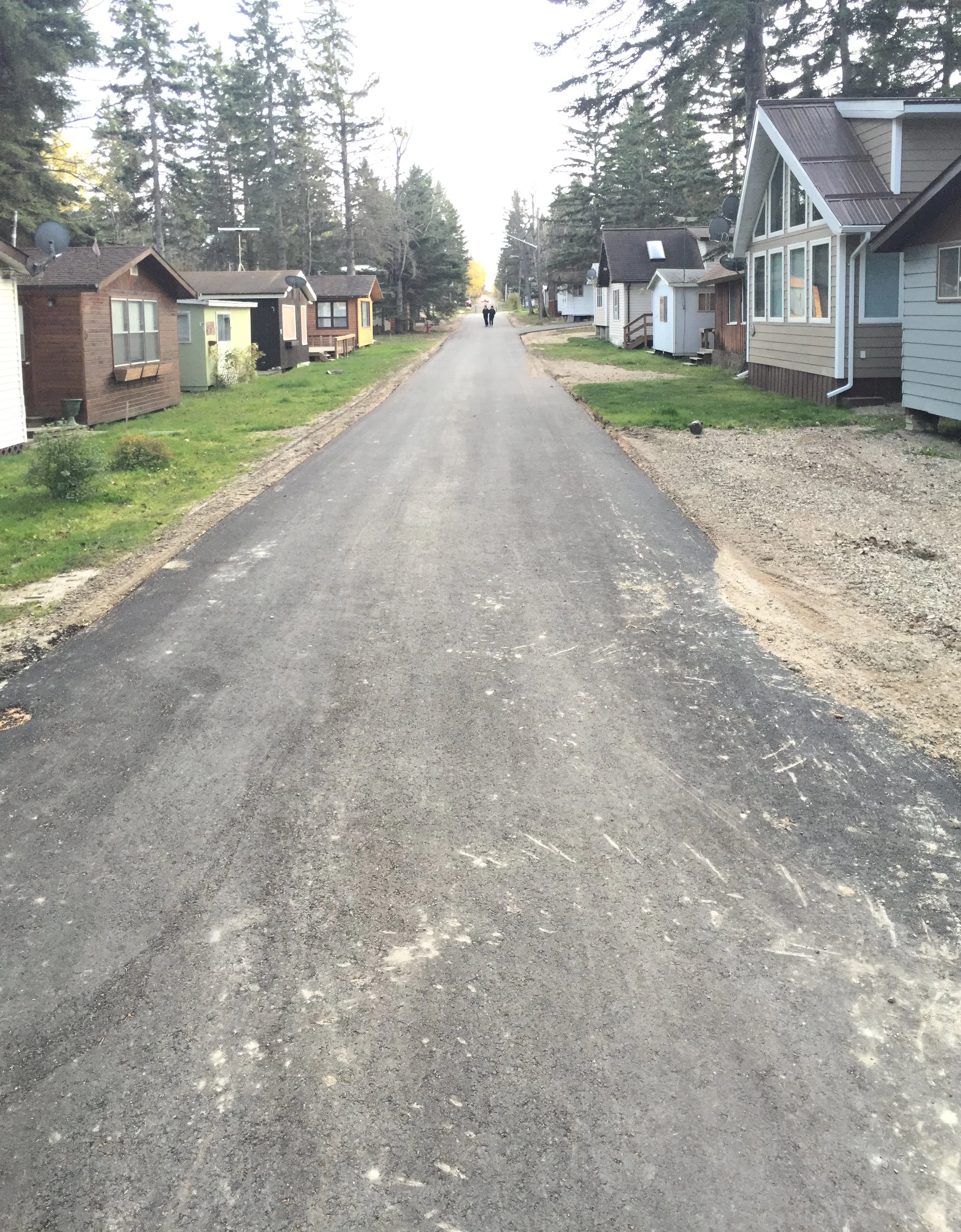
New paved roads in the Old Campground.
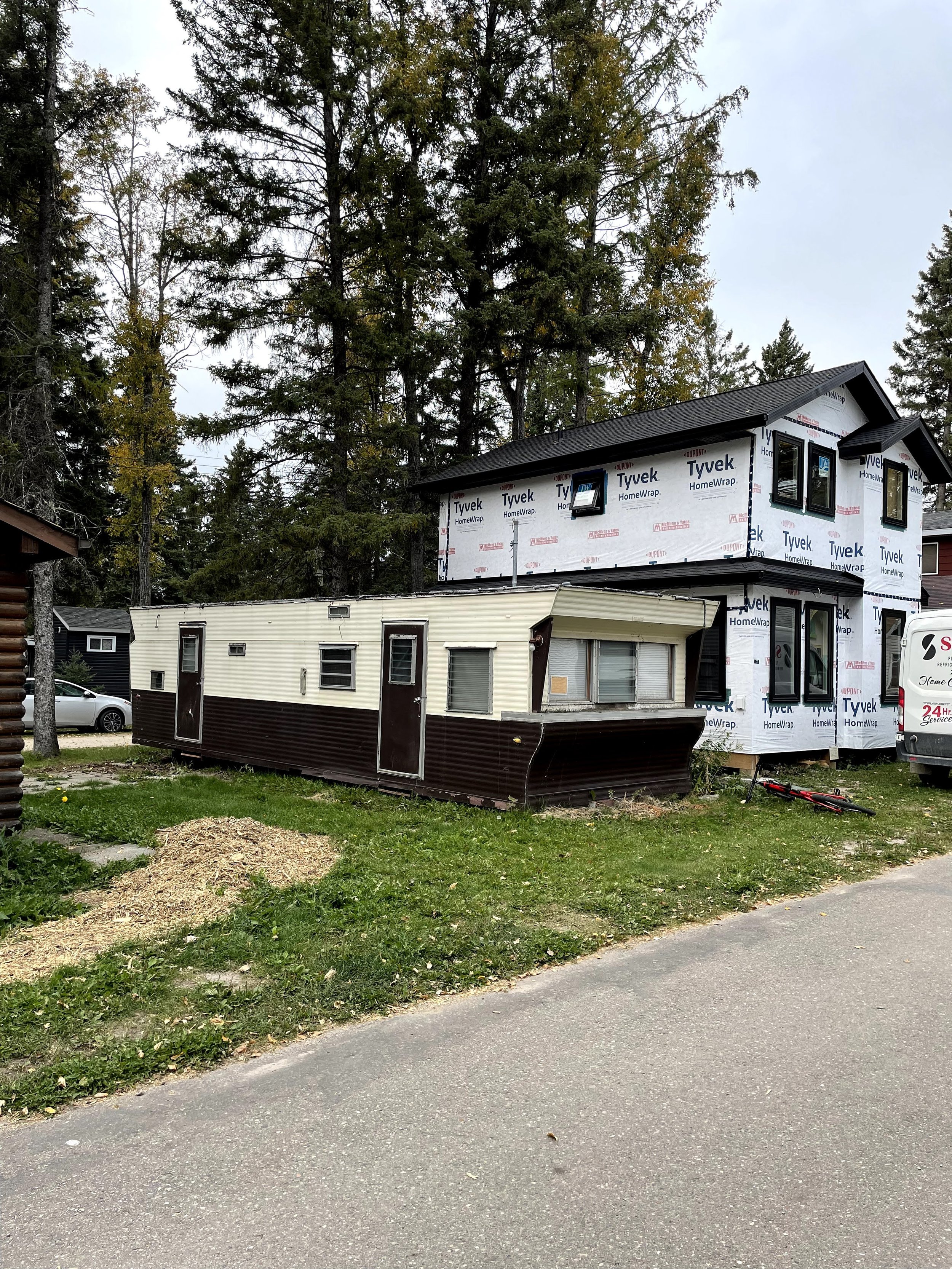
Evolution of cabins in the Old Campground; the old and the new.
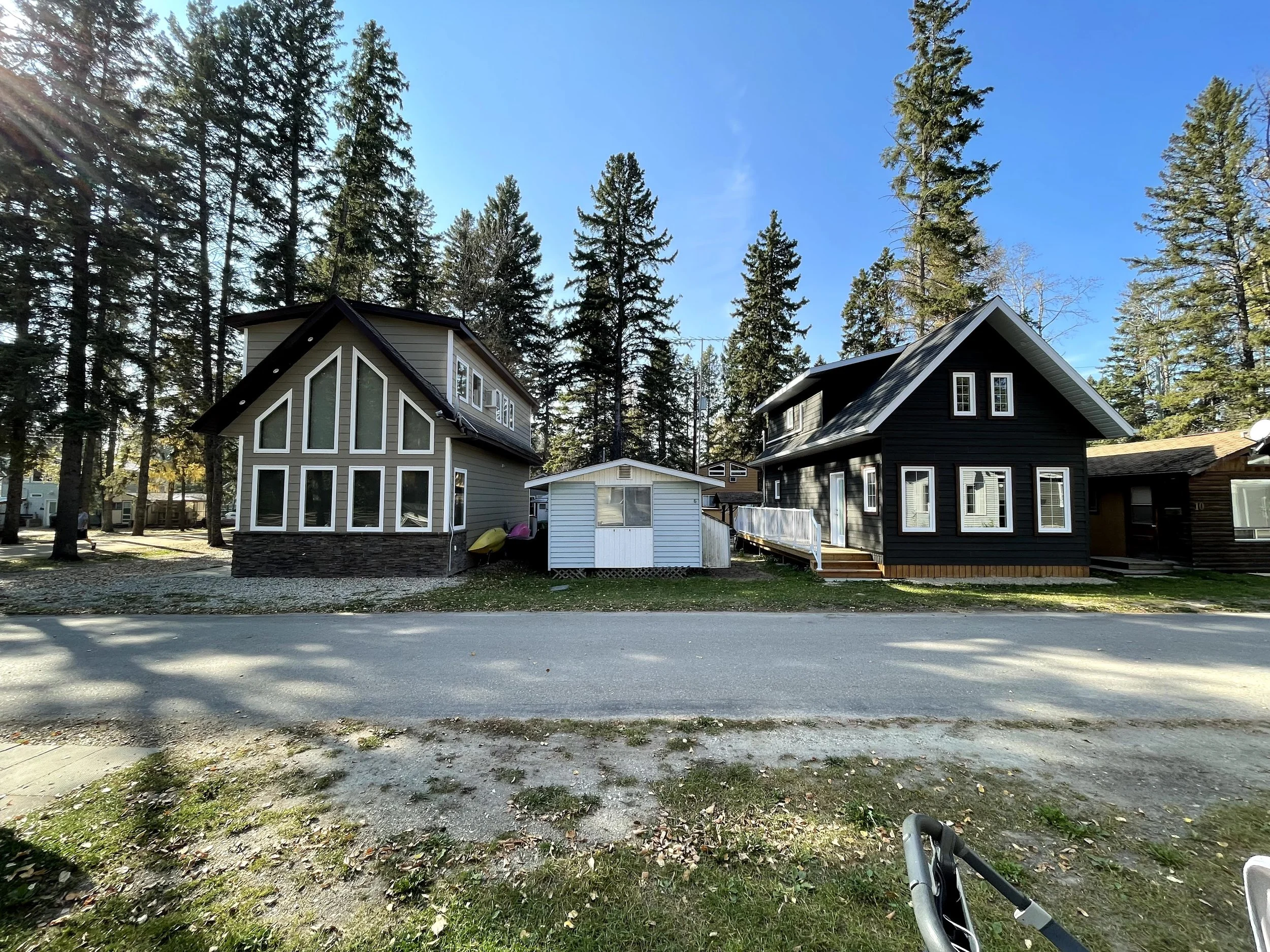
Old cabins between newer, updated models.
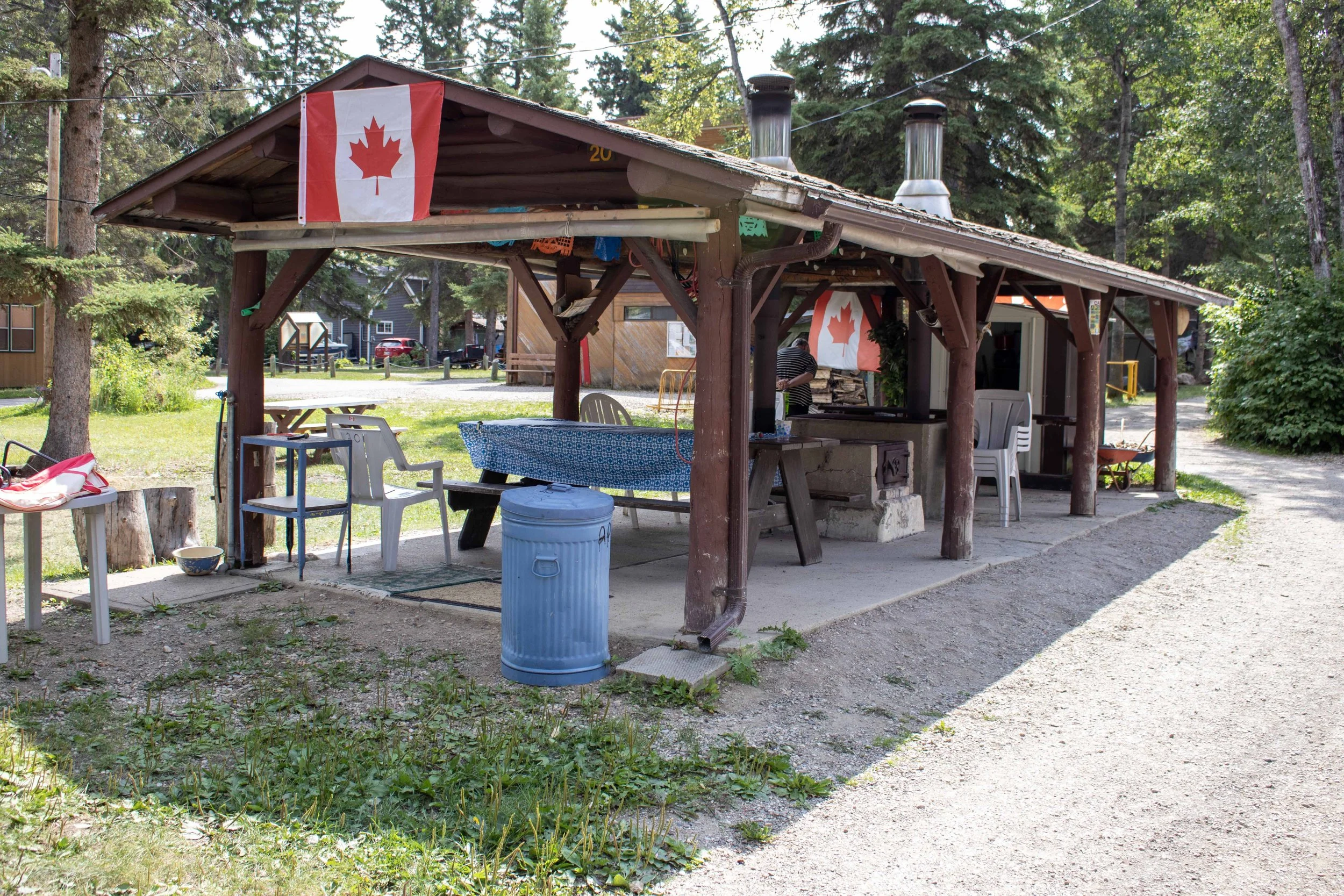
Cookshacks remain a community meeting space.
Evolution of cabins on 3rd St N.
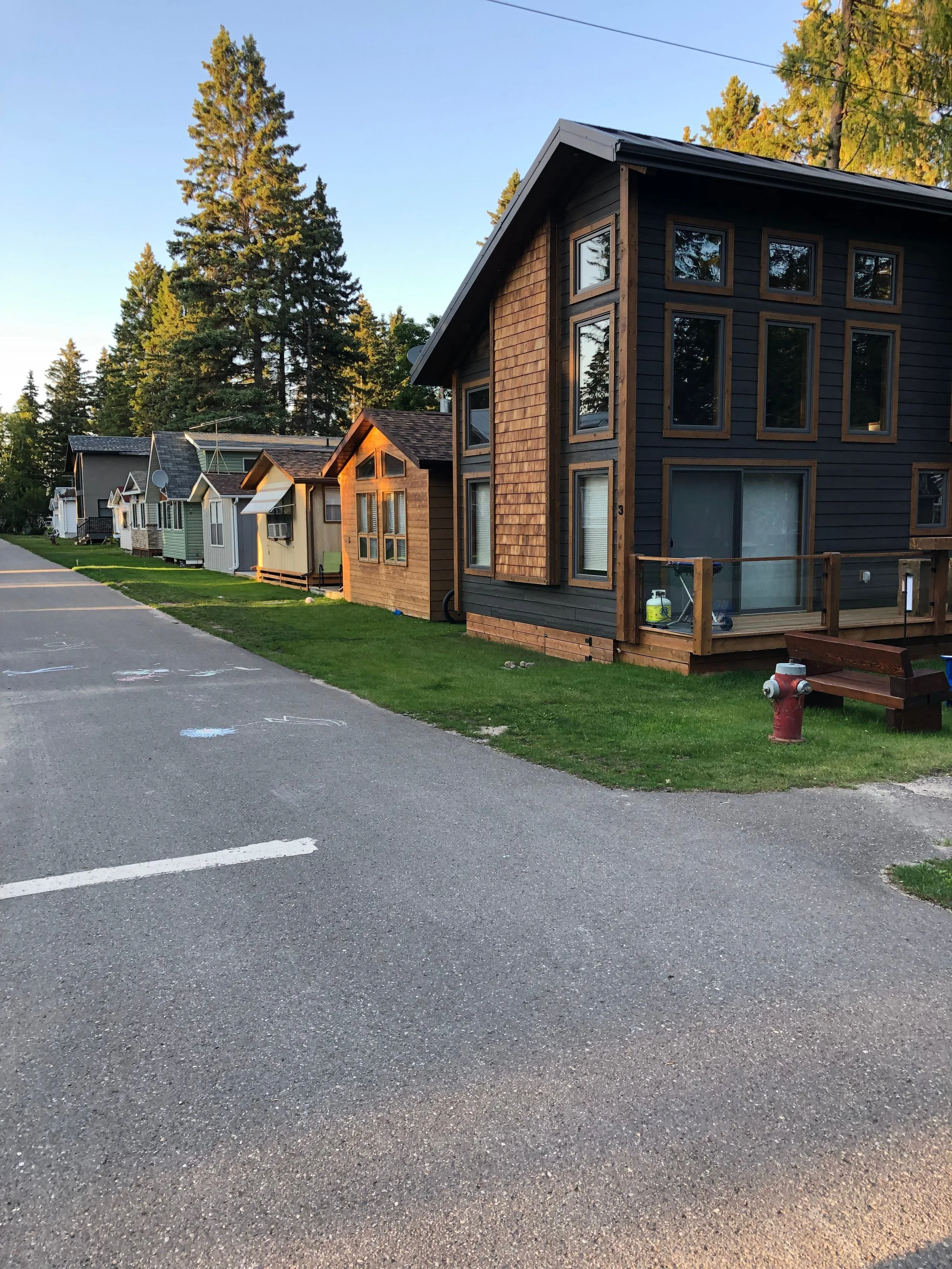
Evolution of cabins on 3rd St N.